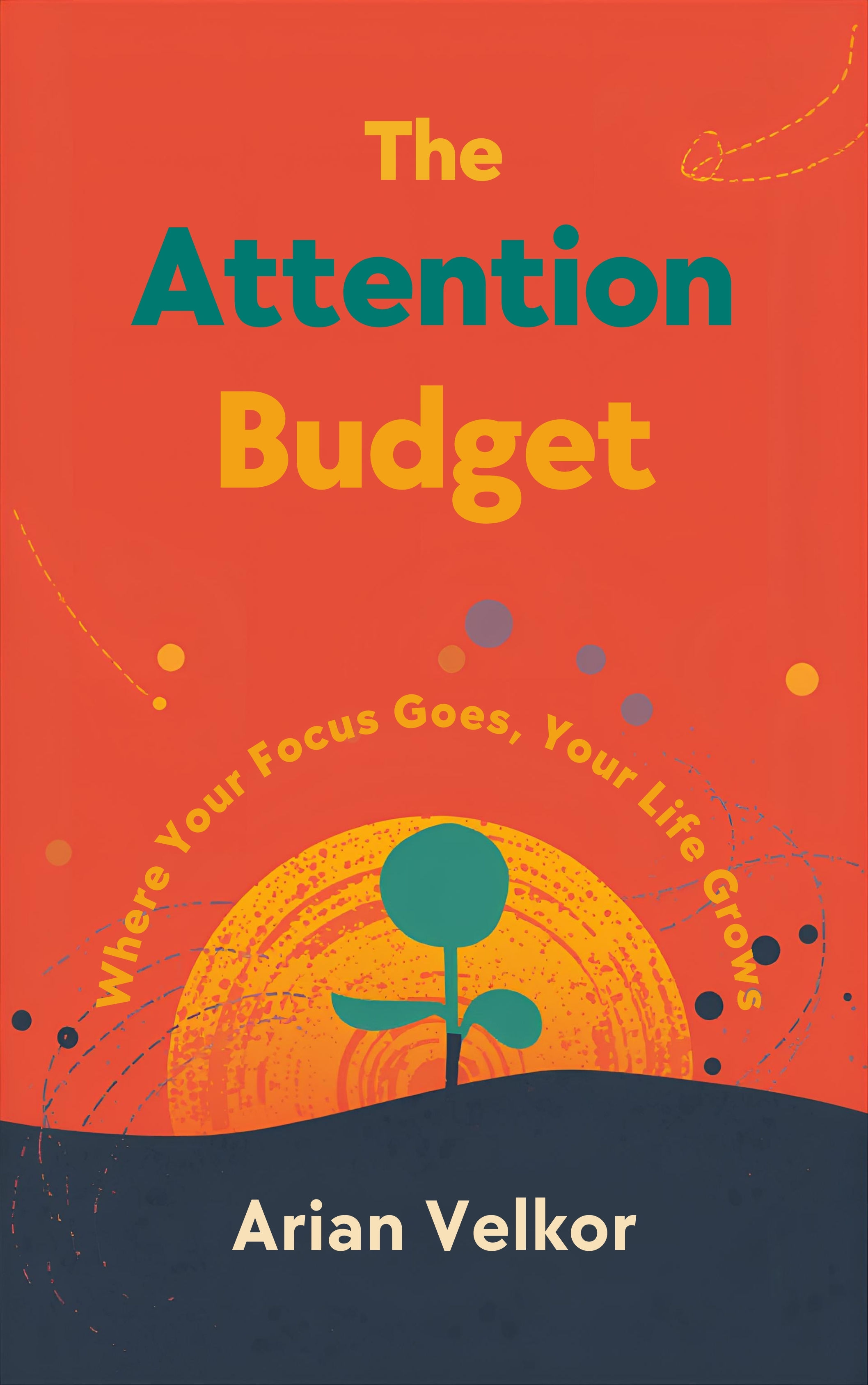
Your calendar can be immaculate and your bank balance carefully tracked, yet your days still feel thin, scattered, and oddly unsatisfying. The missing budget is attention: the finite resource that decides what you notice, what you finish, and what your life becomes. The Attention Budget reframes focus as something you can allocate, protect, and invest with intention, without pretending you can simply "try harder" in an always-on world.
Arian Velkor offers a clear, practical method for attention budgeting that fits real life: map where your focus leaks, choose categories that reflect what matters now, and translate them into time blocking you can actually keep. You will learn input reduction strategies that keep you informed and connected, while cutting the noise that erodes decision-making. You will also build durable phone rules, shape environment design to support the work and relationships you care about, and use simple focus rituals to start and end work cleanly.
This book is for people who want less digital distraction without going off-grid: professionals managing constant communication, students juggling competing demands, creatives protecting craft time, and anyone who wants to feel more present at home. With a short weekly attention review, you will adjust your budgets, update your defaults, and recover your focus week by week. The result is not a stricter life, but a clearer one: fewer accidental spends, more deliberate attention, and days that better match what you would say matters most.
The Attention Budget
SKU: 9789377780678
$25.99 Regular Price
$20.25Sale Price