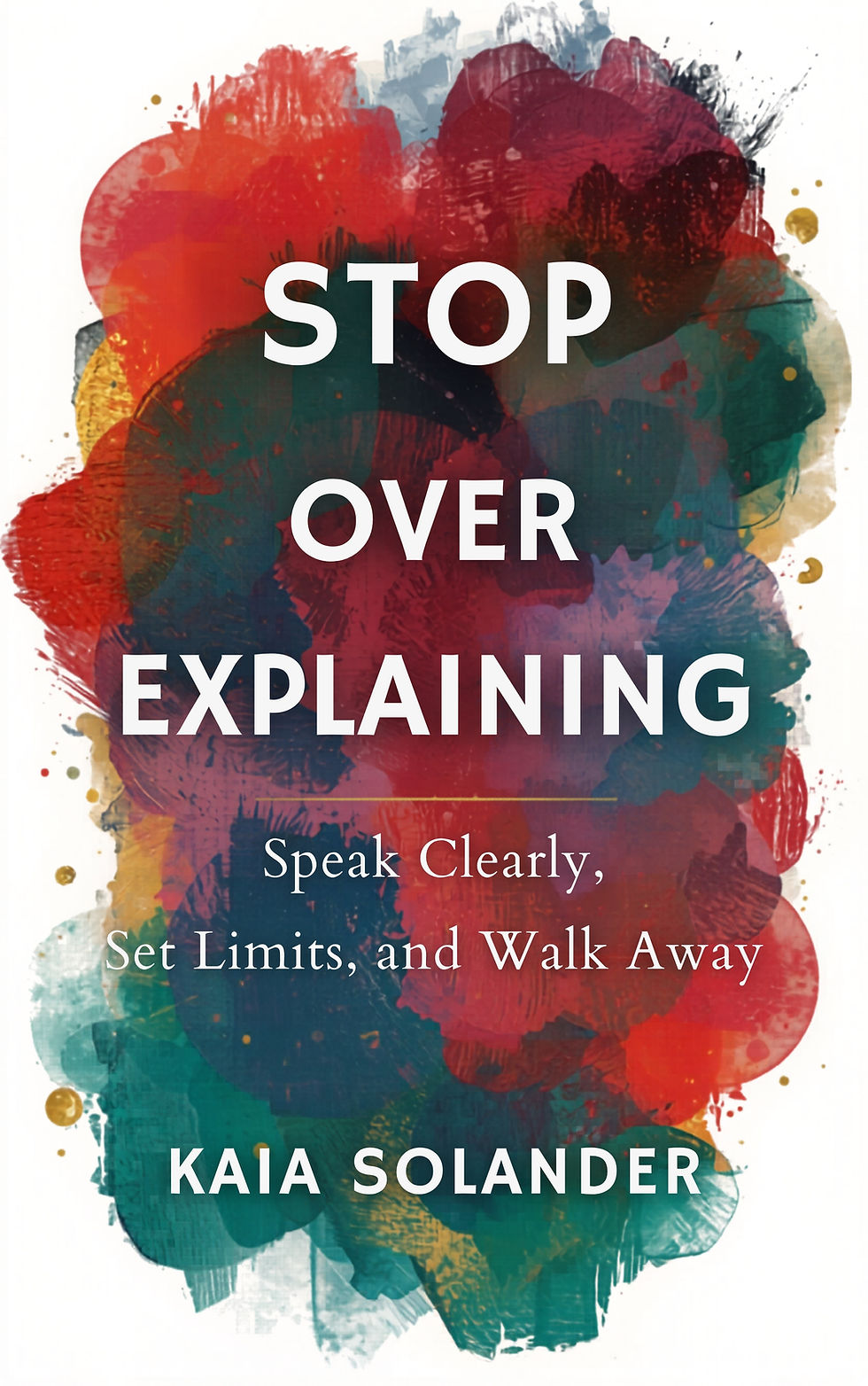
If you are known as the reliable one, the easy one, the one who never makes a fuss, you may also be the one quietly carrying everyone else’s comfort. Less People-Pleasing is a practical guide to staying warm and generous without giving away your time, your energy, or your sense of self. It treats people-pleasing for what it often is: an approval strategy that creates short-term peace and long-term resentment.
Kaia Solander shows you how to spot approval seeking patterns in real time, identify what you actually need, and use assertive communication scripts that are clear without being harsh. You will learn boundary setting skills you can apply at home, at work, and in close relationships, including how to say no without over-explaining, and what to do when someone asks again. Just as importantly, the book prepares you for the part no one warns you about: the emotional aftershock. You will learn how to handle guilt after boundaries, practise handling pushback, and follow through calmly so your limits become believable.
This book is for people who want healthy relationship limits but fear being seen as selfish, difficult, or unkind. It is also for anyone who has tried "just be more confident" advice and found it collapses the moment a loved one is disappointed. The goal is not to turn you into a hard-edged person; it is to rebuild self respect habits so kindness is a choice, not a compulsion. You can be considerate and still be clear. You can care and still have a life that fits you.
Less People-Pleasing
SKU: 9789377789312
$33.99 Regular Price
$24.52Sale Price